How fake carriers and phantom carriers operate
The process often follows a pattern: a supposedly reputable company responds to a transport offer via a freight exchange or by email. At first glance, everything seems plausible. The company name, licence number and VAT number are correct, as the data often comes from public registers or has been taken from a genuine carrier. The only details that have been changed are the key contact details: telephone number, email address or bank details.
Once the order has been placed, the goods are collected – but not by the company the collector claims to represent. The cargo is subsequently not delivered. Another variant involves passing the transport order on to an unverified subcontractor, often referred to as double brokering.
Unlike in cases of traditional transport damage, the goods are not damaged – they have simply disappeared. Perpetrators are not only interested in high-value goods such as electronics or metals. Goods that can be resold quickly are particularly attractive: food, confectionery, drugstore goods or promotional items. It is precisely such products that often reappear later via intermediaries or clearance channels.
Who ultimately bears the loss?
Economically, the loss initially affects the client. In practice, however, the next question quickly arises: did the contracted carrier or logistics service provider check carefully enough who they entrusted the goods to?
This is precisely where the actual liability risk lies. Anyone who engages an unknown carrier without sufficient checks cannot simply invoke the usual liability limits in the event of damage. It is then no longer just a question of goods having gone missing, but also of whether the choice of carrier was reckless. In extreme cases, liability beyond the statutory limits may apply. Carriage liability insurance will then also scrutinise whether agreed due diligence requirements were met.
Legally, the main issues here are the liability of the carrier or freight forwarder and the question of whether the statutory liability limit applies. For businesses, however, the most crucial factor is this: careful selection and documentation prior to the first order can later determine whether a loss remains limited or takes on existential proportions.
What companies should check before the first transport order
Particularly with new carriers, one should not rely solely on quick availability and low freight rates. The following checks are particularly advisable:
- Check the licence or goods vehicle permit
- Check the commercial register entry, address and VAT registration number
- Request current proof of insurance for carrier liability
- Verify contact details independently, in particular by calling back via officially listed telephone numbers
- Question any changes to bank details or short-term discrepancies in contact details
- Document driver, vehicle and registration details upon collection
Contractual and organisational safeguards
In addition, it should be clearly stipulated whether and under what conditions a transport order may be subcontracted. A ban on subcontracting without prior written consent, documented order confirmations and a fixed onboarding process for new carriers significantly reduce the risk.
Last-minute changes to the operating company ‘on demand’ should be avoided. If damage does occur, rapid claims management is crucial: claims must be secured, deadlines checked, insurers informed and outstanding claims asserted in good time.
Freight fraud cannot be completely prevented. But it can be made significantly more difficult. And in the event of a dispute, clear documentation can make all the difference.
Conclusion
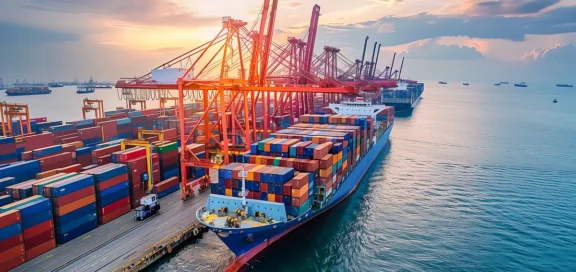
Freight fraud by fake carriers is no longer a marginal issue, but a real risk in international transport. Once the goods have disappeared, it quickly leads to significant losses, complex liability issues and disputes with the insurance company.
Companies should therefore check new carriers not only after a loss has occurred, but before the first order: licences, registration details, proof of insurance, contact details and collection information should be verified and documented in a traceable manner.
Such checks do not completely prevent cases of fraud. However, they make it considerably more difficult – and can be decisive in the event of a dispute to demonstrate due diligence and limit liability risks.
The most important points in brief
- Fake carriers and phantom carriers use stolen identities, freight exchanges and ad-hoc communication channels to take on real shipments – the goods are often simply gone afterwards.
- Anyone who commissions an unknown carrier without sufficient checks risks significant losses, liability beyond the usual limits and disputes with their carrier’s liability insurance.
- The key is to carry out checks before the first job: licence, register details, proof of insurance, independent verification of contact details and proper documentation of collection.